

Meningococcal Disease (N. meningitidis)
Georgia Meningococcal Disease Notice |
|
Meningococcal disease is a serious and potentially life-threatening illness caused by Neisseria meningitidis. The infection can cause meningitis (infection of the lining of the brain and spinal cord) and bloodstream infections and may result in severe complications, long-term disability, or death. College students living in residence halls or other group-housing environments may be at increased risk for meningococcal disease because of close and prolonged contact with others. Vaccination is the best way to help protect against meningococcal disease. Meningococcal vaccines significantly reduce the risk of infection but do not eliminate the risk completely. In accordance with O.C.G.A. § 31-12-3.2, applicable newly admitted students residing in campus housing or fraternity or sorority housing are required to acknowledge that they have received meningococcal vaccination within the preceding five years or have reviewed the meningococcal disease and vaccination information provided by the institution. |
The Georgia Department of Public Health (DPH) has confirmed an increase in the number of invasive meningococcal disease infections. SHWC is encouraging students to review their immunization status and make sure that they are protected from this highly contagious illness.
College students are at a higher risk of meningococcal disease.
What is Meningococcal Disease?
Meningococcal disease refers to any illness caused by bacteria called Neisseria meningitidis. These illnesses are often severe, can be deadly, and include infections of the lining of the brain and spinal cord (meningitis) and bloodstream.
It is spread from person to person by coming in close contact with someone who is sick or who carries the bacteria. The bacteria can be spread by:
- Sharing anything that comes in contact with saliva, like eating utensils, food or drinks;
- Being in close quarters with someone;
- Being sneezed or cough on; or
- Kissing
Symptoms
Symptoms of meningococcal disease can first appear as a flu-like illness and rapidly worsen. If you have any symptoms, seek medical attention immediately.
The most common symptoms include:
- Fever
- Headache
- Stiff neck
Additional symptoms, such as:
- Nausea
- Vomiting
- Photophobia (eyes being more sensitive to light)
- Altered mental status (confusion)
Protect Yourself and Others
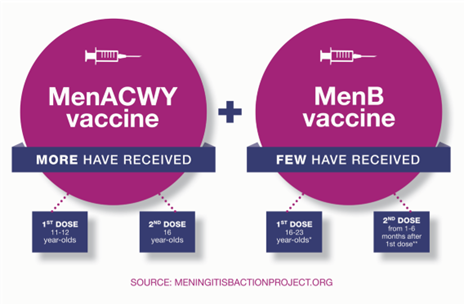
The best way to prevent meningococcal disease is to get vaccinated. Two separate meningitis vaccines are necessary to be fully immunized against the disease: MenACWY and MenB.
Meningococcal disease strain B is the most common cause of bacterial meningitis on college campuses. Make sure you have BOTH meningitis vaccines to fully protect yourself and those around you.
Next Steps
If you are not sure that you are up to date on your meningitis vaccines, please call SHWC at 404-756-1241.
If you are ready to protect yourself and get the meningitis vaccine, visit Point and Click , to schedule an appointment. SHWC is happy to offer both the MenACWY and MenB to those students who need them.